5 Early Signs of Plant Stress (That Appear Before the Leaves Show It)
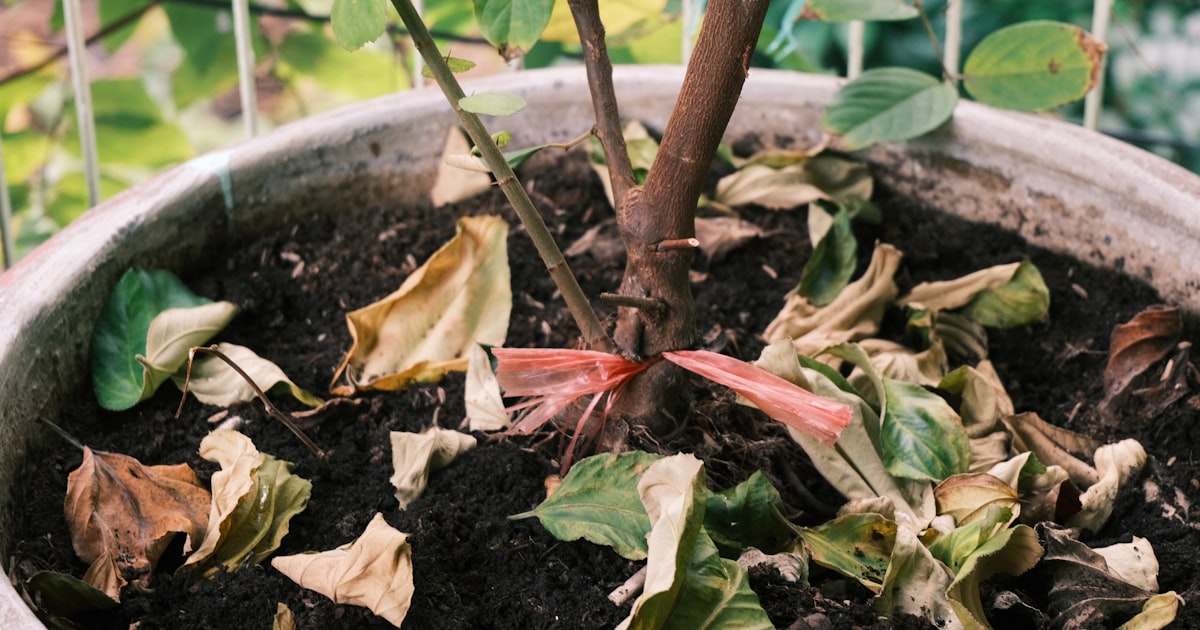
When a leaf finally yellows, curls, or drops, most people call it "the plant is stressed." But that visible symptom is a lagging indicator — the actual stress event happened days or even weeks earlier. By the time you see it, your plant has already spent significant energy trying to compensate, and the leaf you're looking at is often the plant cutting its losses.
So what's happening underneath, and how do experienced growers catch problems before the foliage gives anything away? Almost every early warning shows up in one of four environmental readings — soil moisture, humidity, temperature, and light — well before it reaches a leaf. A sensor that samples all four every 90 minutes to 5 hours doesn't get tired, doesn't forget last week's baseline, and doesn't wait for the plant to look sick before it notices something has drifted. Here are the five signals worth knowing.
1. Soil Moisture That Plateaus
Healthy, actively growing plants drink. Roots pull water up, leaves transpire it out, and the pot dries down at a fairly predictable pace. When soil moisture stops dropping at its normal rate, something has changed — and it's rarely good. A root system damaged by overwatering or cold shock loses the ability to take up water, so the soil just sits there, wet. The cruel part is that the plant can wilt despite saturated soil: the roots are too compromised to move water even though there's plenty around them. By the time you see that wilt, root rot is usually well underway.
On a moisture chart the signature is unmistakable once you know it. A healthy pot draws a sawtooth — a sharp jump when you water, a steady decline as it dries, repeat. A stalling plant's decline flattens out: each dry-down takes a little longer than the last, and the downslope goes lazy. That flattening is the leading indicator. A finger in the soil feels "still a bit moist" and moves on; a continuous reading shows the slope changing across a week and, in PlantSense, the watering estimate quietly stretching from "Water in ~4 days" to twelve — a lurch that's worth investigating rather than celebrating.
Watch for: dry-down times that suddenly lengthen, or soil that never quite dries between waterings.
The University of Maryland Extension has a great primer on how watering frequency should vary with conditions, not a calendar.
2. Stomatal Closure Before Wilt
Plants regulate water loss through tiny pores called stomata, mostly on the underside of the leaves. Each pore is flanked by guard cells that swell to open it and go slack to close it. Under heat or drought stress, the plant releases a hormone signal that tells those guard cells to shut early in the day — throttling water loss long before the leaf loses enough turgor to visibly droop. It's the plant's first line of defense, and it happens silently.
You can't watch stomata move, but you can infer the consequence. When a plant transpires normally, the air immediately around its canopy holds a little more moisture than the rest of the room. When the stomata close and transpiration falls, that local lift disappears and the nearby humidity edges down. It's a subtle shift — not something you'd feel walking past — but a sensor sitting with the plant logs it. Read once, it's noise; read every 90 minutes to 5 hours against the plant's own baseline, a persistent daytime dip in local humidity is an early flag that the plant has started rationing water.
3. Daytime Temperature Stress
Transpiration doesn't just move water — it cools the leaf, the same way sweat cools skin. On a sunny afternoon a well-hydrated plant can run a few degrees below the surrounding air. A stressed or under-watered plant that has closed its stomata loses that cooling and heats up with the room. Commercial growers chase this differential with thermal-imaging cameras.
At home you don't have infrared, and a single probe reads the air the plant sits in rather than the leaf itself — so the achievable version of this signal is watching the plant's thermal environment for the shocks it can't tolerate. Most indoor temperature stress isn't the room's daily average; it's the transient a spot-check never catches: a cold draft from a door that opens all winter, a dry blast from a heating vent three feet away, a windowpane that radiates heat by afternoon and cold at night. A reading every 90 minutes to 5 hours builds a baseline for "normal here" and makes those spikes and dips visible as a pattern — so you can move the plant, or set a per-plant temperature alert, before the stress compounds.
4. Light Starvation Without Leggy Growth
Every houseplant guide mentions leggy, stretched stems as the sign of too little light. But there's an earlier stage that gets missed: the plant simply stops. New growth stalls and the plant holds what it has. It isn't reaching — it's conserving, because photosynthesis is no longer producing enough to cover the plant's own respiration, and dipping into reserves is safer than building leaves it can't pay for. This plateau is routinely misread as the plant "being settled and happy," because nothing dramatic is happening. Nothing dramatic is the problem.
The reason this one fools people is that human eyes are terrible light meters — pupils adapt, so a corner that reads "bright" to you can be delivering a fraction of what a plant needs. A continuous PAR sensor sidesteps the guess. It measures the photosynthetically active light the plant can actually use and charts it across the day, so a spot that stays low hour after hour shows up as a flat, low line rather than a hopeful impression. Cornell's indoor plant guide breaks down the light requirements for common species; the sensor tells you whether your window is actually meeting them.
5. Humidity Crashes You Never Notice
Central heating kicks on overnight. Air conditioning runs in bursts. A dry cold front rolls in. Home humidity can drop 20 percentage points in a few hours and rebound before morning — you'd never feel it, but a plant from a humid forest understory does. Each crash pulls moisture out of the leaves faster than the roots can replace it, and the plant absorbs the swing.
The damage is cumulative and delayed, which is what makes it so easy to miss. Chronic dips below 40% RH surface weeks later as crispy leaf edges, aborted flower buds, and the dry conditions spider mites love. A spot-check at noon tells you nothing about a crash at 2 a.m. Continuous monitoring makes the pattern obvious — a humidity line that sags every night the heat runs is a very different story from one that holds steady — and a per-plant humidity threshold can alert you when the air is drifting dry for a species that won't tolerate it.
The Pattern: Lagging vs. Leading Indicators
Visible symptoms are lagging indicators — they report what already happened. Environmental data — moisture, temperature, humidity, light — is a leading indicator. It tells you what's about to happen, while there's still time to change it.
That's the core idea behind PlantSense. A small sensor in the pot watches all four conditions every 90 minutes to 5 hours, learns what normal looks like for that plant in that spot, and flags the drift before it becomes damage you can see. Each metric has its own alert range, so the plant can reach you before its leaves do. You don't need to become a botanist; you just need the data that botanists rely on.
Your plants are already telling you what they need. You just need a way to listen.